
Historical / Polska
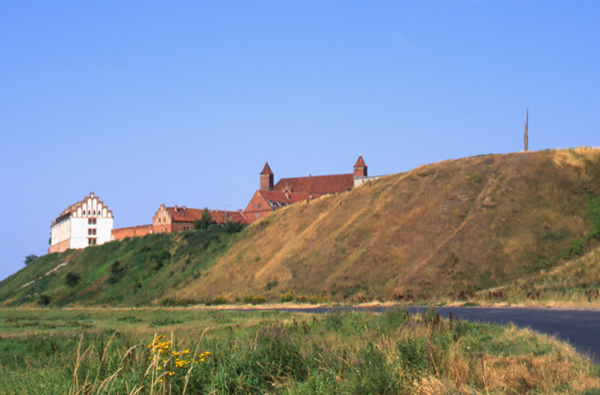
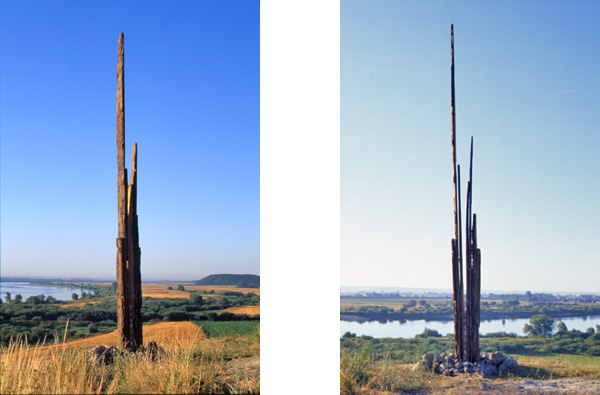
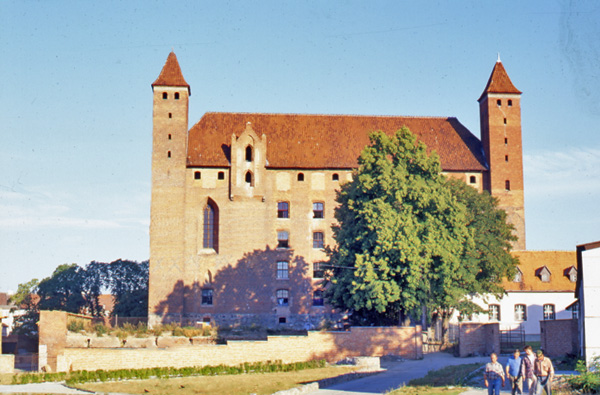
Installed on the southern plateau of Gniew Castle overlooking the Vistula River Valley, Segue comprised two large-scale sculptures built from ancient oak, river rock, and regional materials. The castle—constructed after 1290 (late 13th / early 14th century)—rises above a two-million-year-old floodplain carved by glacial ice. The plateau sits on the west bank of the Vistula, the historic line of demarcation between Eastern and Western spheres of influence.
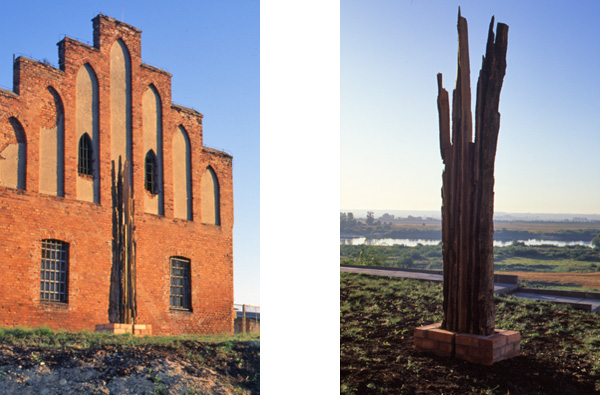
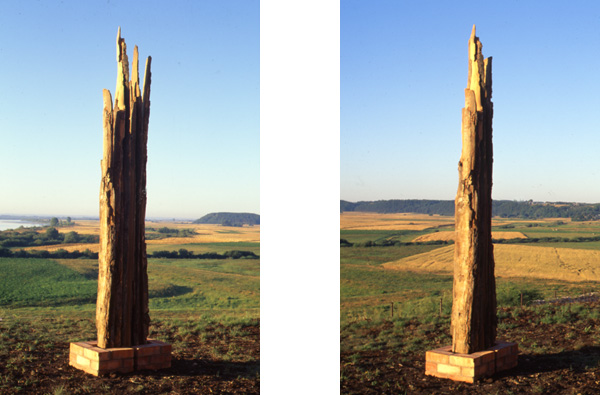
The oak used in the sculptures was excavated from the Baltic coast near Gdańsk, dating to approximately 1255, when the settlement existed only as a small village. Preserved in mud along the historic Amber Road between Rome and the Baltic, the material was analyzed by the Archaeological Museum in Gdańsk, confirming its early medieval origin. Its inclusion linked the installation to early regional habitation and to broader networks of trade, migration, and transformation.
Constructed with locally sourced bricks containing compressed human bone—evidence of Teutonic building methods—the work echoed the stratified nature of the site itself: a structure of conflict, devotion, and persistence layered in time. The slatted forms permitted wind to pass through, producing tonal vibrations that carried across the valley. Acting as viewing frames, they directed attention to terrain shaped by overlapping forces—glacial movement, medieval crusades across the floodplain, and erosion still visible along the valley walls. On the far horizon, an industrial smokestack stood on the east side of the valley, a contemporary marker within the same visual field.
The installation weathered naturally until both sculptures were struck by lightning in the same storm and destroyed. Fire continued the site’s history of loss and renewal. The remaining foundations endure as indicators of time’s ongoing negotiation between permanence and disappearance. ▧
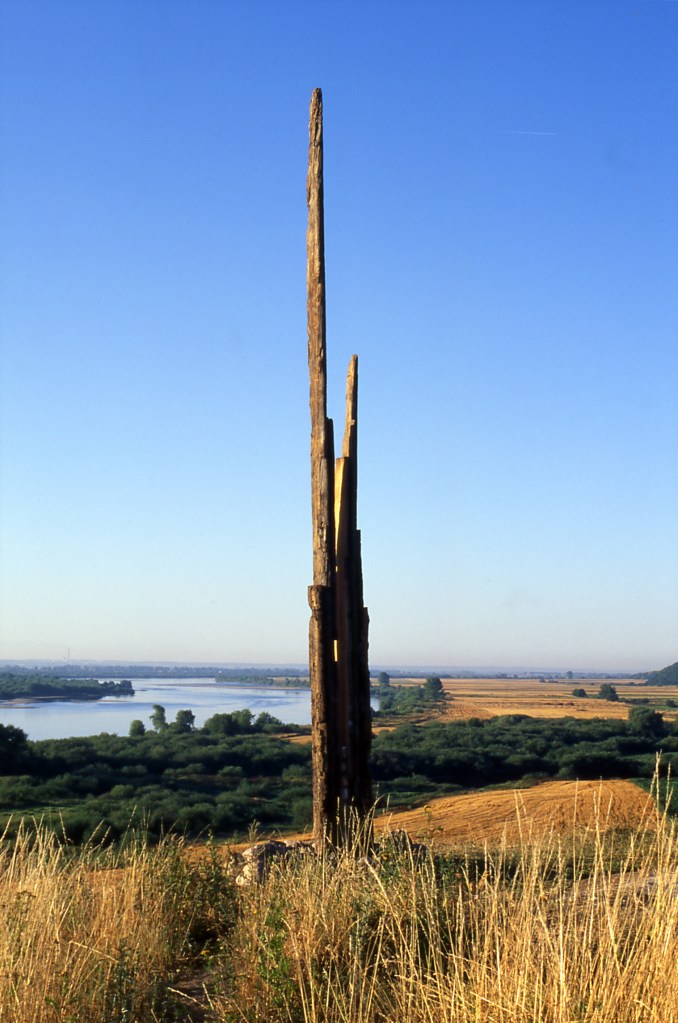
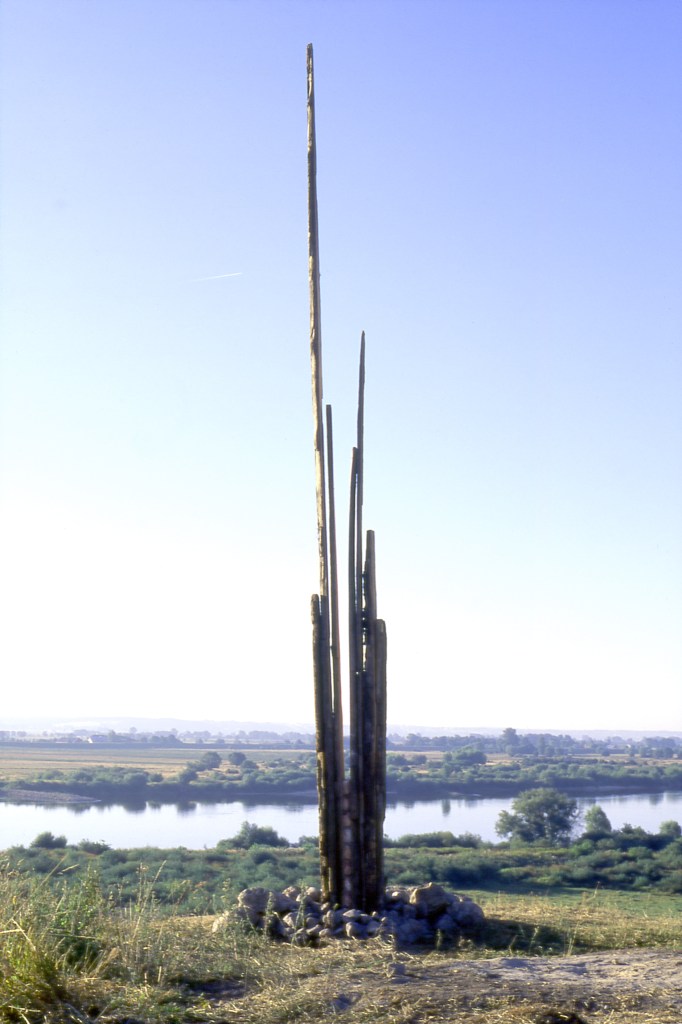
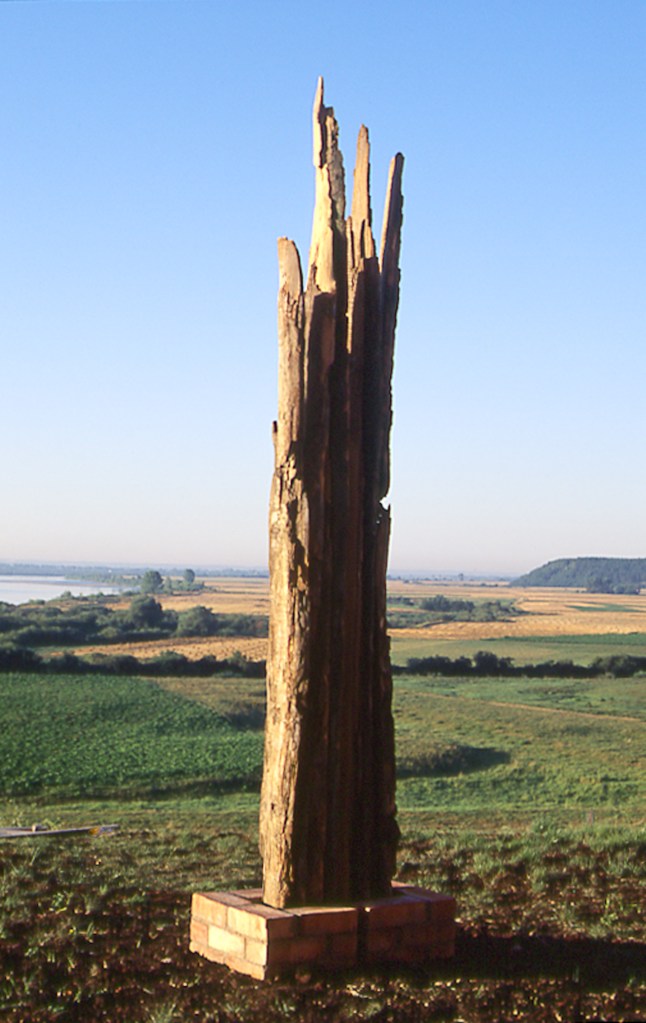
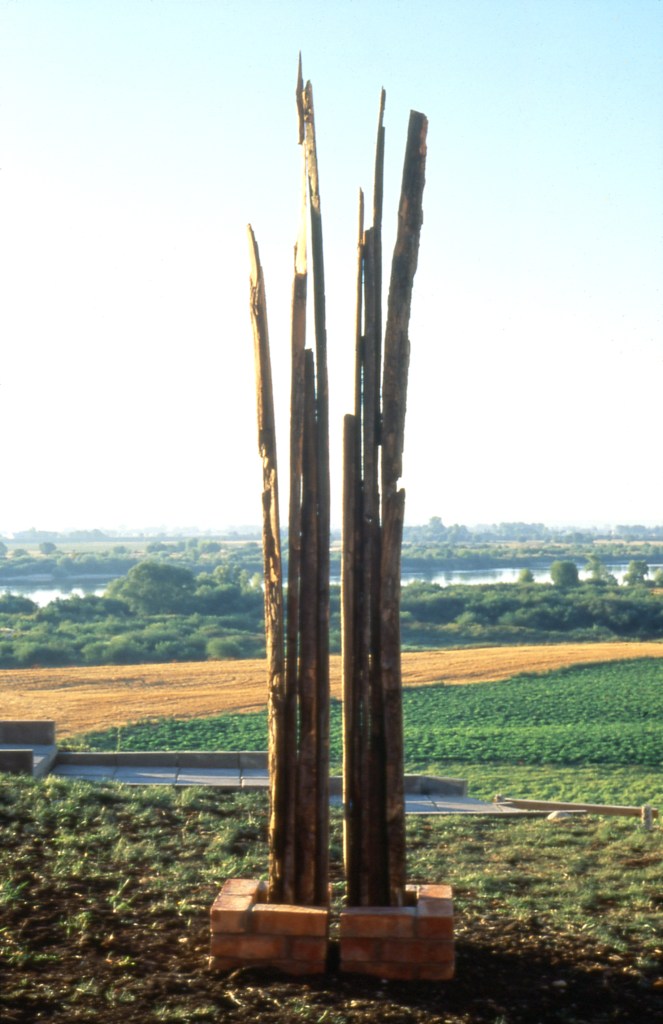
Segue, 1995
Edward Dormer
Public Art
Zamek krzyżacki w Gniewie
Gniew, Pomeranian Voivodeship Polska
Residency: NOTORO International Art Symposium
In-kind support: Muzeum Archeologiczne w Gdańsku, Jennifer Leah Hand, Pánstwowa Galeria Sztuki (Sopot)
Production volunteers: Citizens of Gniew
Documentation: Danuta Godycka, Art Historian
 LUCARNE