
Environmental / United States of America
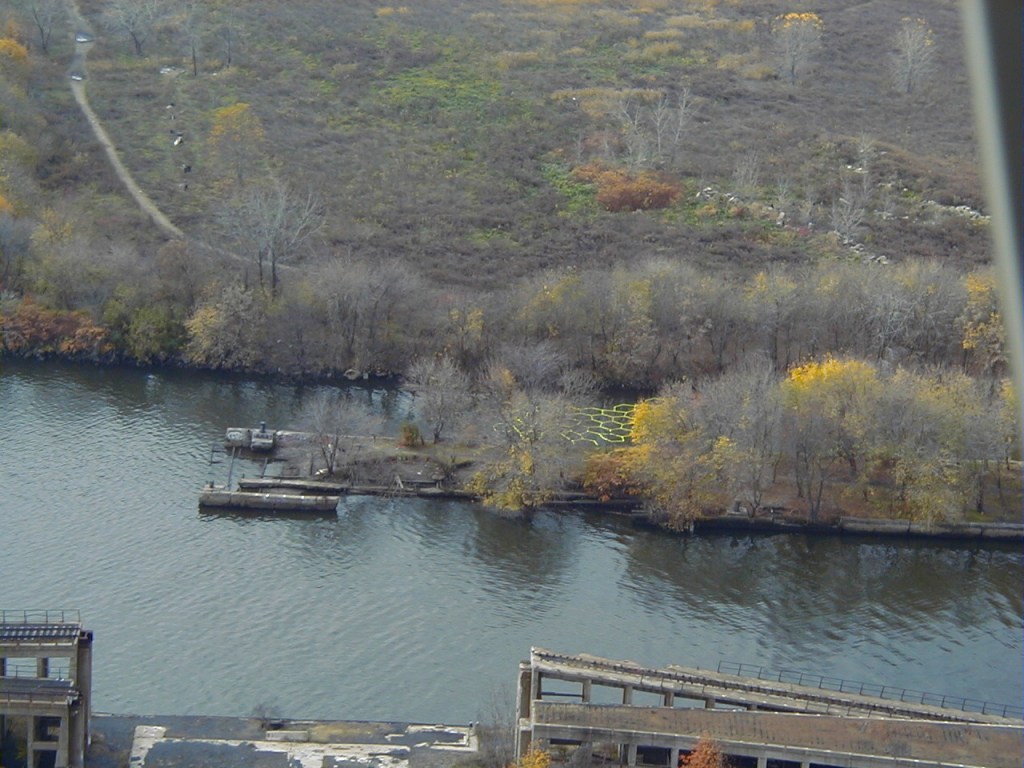
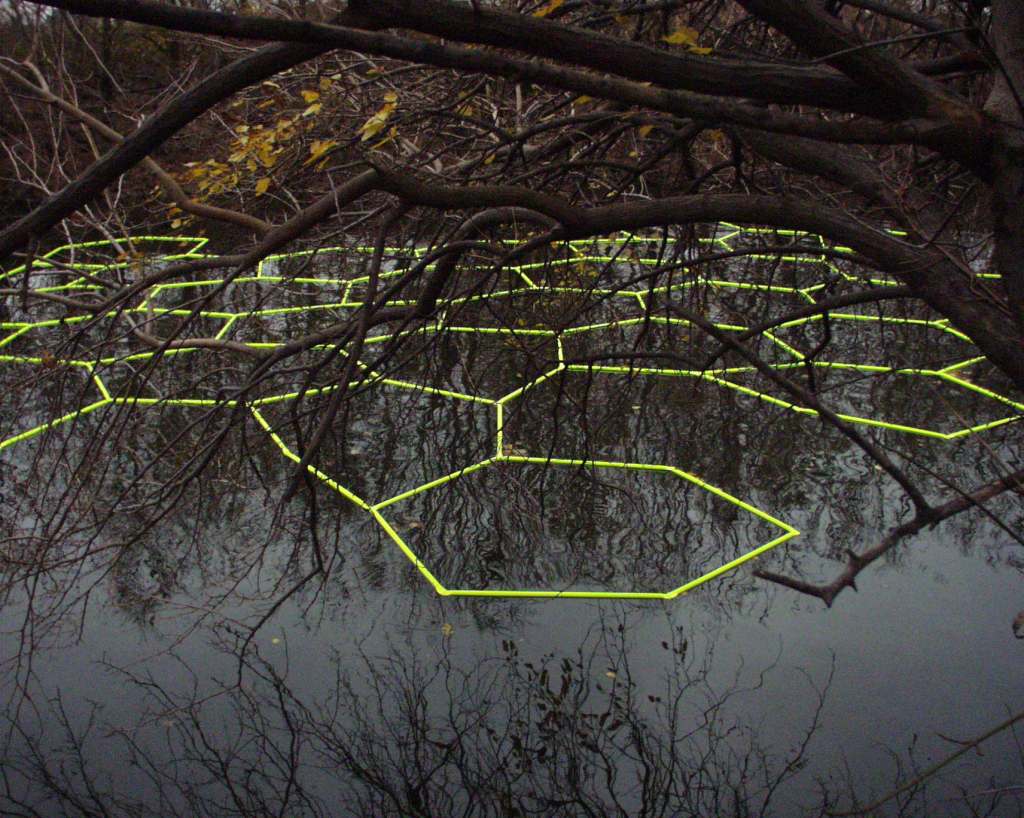
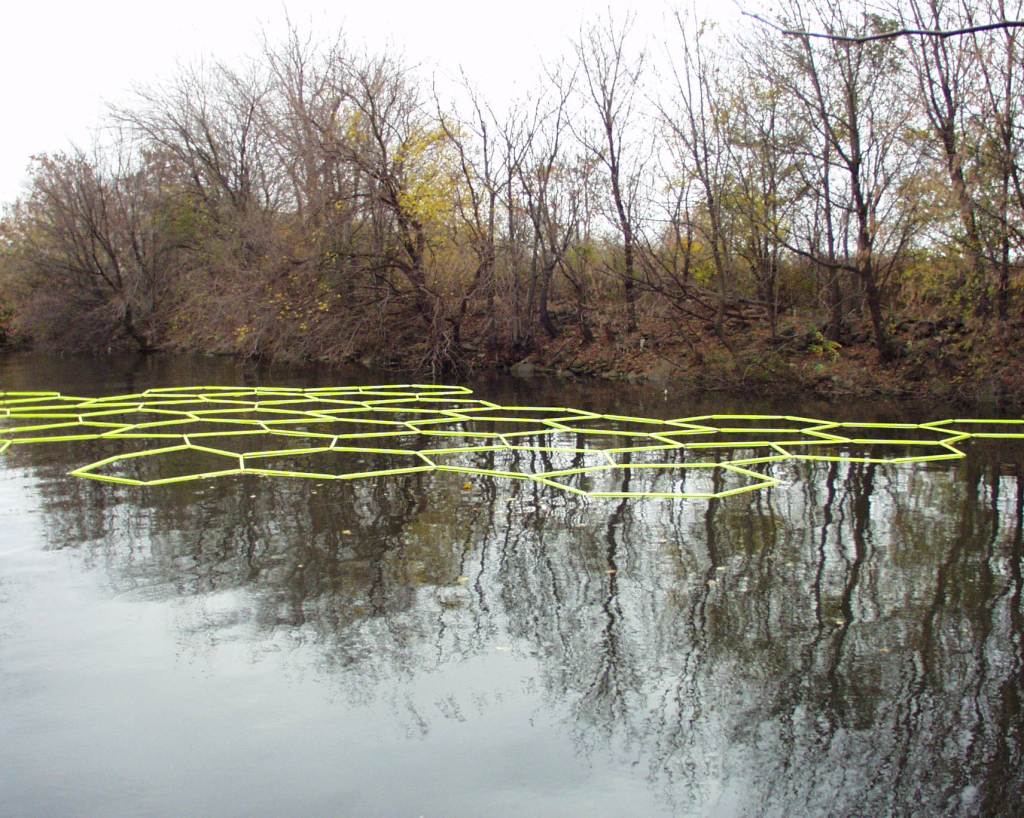
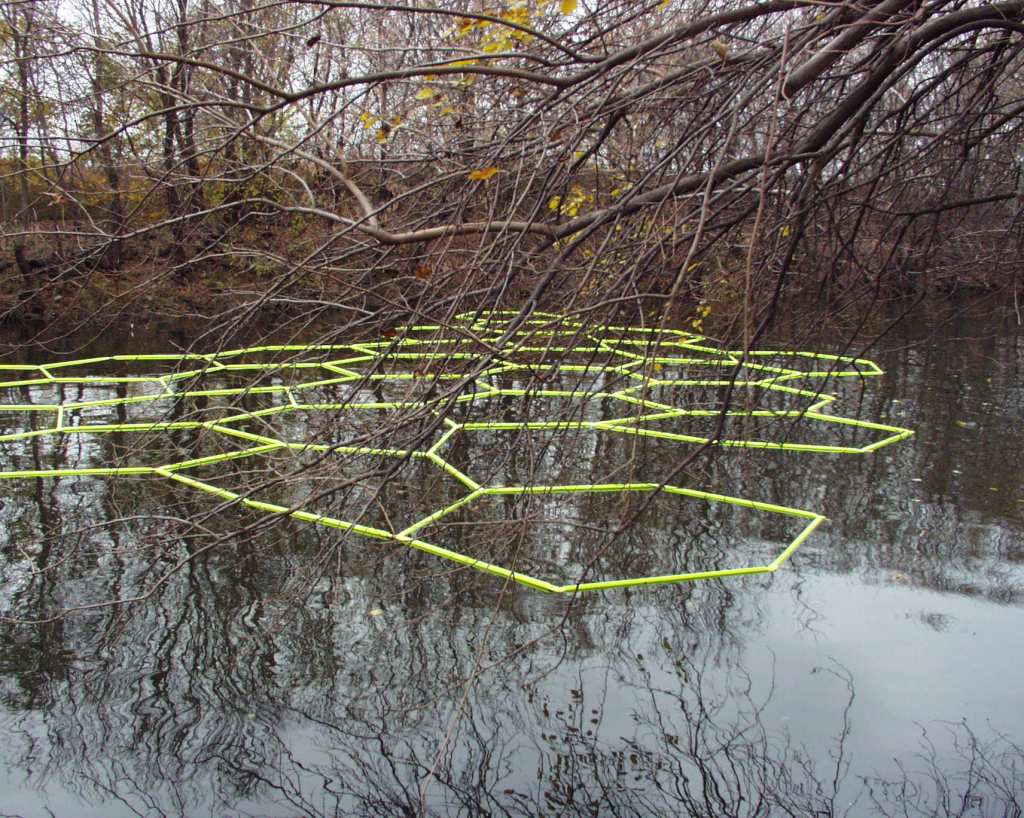
Phosphorescent yellow hexagonal forms, constructed from polyvinyl chloride (PVC), floated on the Delaware River in Philadelphia, Pennsylvania. The forms rendered molecular diagrams at scale within a waterway contaminated by polychlorinated biphenyls (PCBs) and increasingly affected by nanoparticle pollution. PVC—an industrial material and known source of microplastics—was used without mitigation, embedding material contradiction directly into the work.
The United States Coast Guard placed the installation under surveillance, questioning whether the forms constituted a navigational hazard or an unpermitted fishing device within a public waterway. Their procedural response—monitoring, communication, and eventual removal—became part of the work’s record, registering how unpermitted interventions in shared environmental systems activate institutional oversight. Removal required coordination with federal authorities, extending the installation beyond its material duration into regulatory and administrative space.
The installation occurred during strong tidal conditions, requiring continuous navigation and monitoring. Documentation was produced from multiple vantage points—helicopter, shoreline, and watercraft—recording shifting hexagonal patterns as they reconfigured through tidal movement, viewing angle, and distance. Visibility remained contingent and unstable, governed by environmental forces beyond authorial control. ▧

Molecular Notation, 1997, 2000 (video)
Edward Dormer
Public art, environmental work
Delaware River, Philadelphia, Pennsylvania USA
Partial funding by Pennsylvania Council on the Arts
Ground crew: Jessica Dellecave, Jenni Desnouee, Elizabeth Leister, Shawn O’Connell
Aerial photography: Kenneth Kramar, James Wasserman
Video: Edward Dormer (aerial), Shawn O’Connell (ground)
 LUCARNE