
Environmental / United States of AmericA
Three large circles of 400 jute shipping bags were arranged in a triangular formation on the forest floor at The Schuylkill Center for Environmental Education in Philadelphia, Pennsylvania. The material was identical to the jute bags that introduced Japanese stiltgrass to North America in 1919, originally used as packing material for porcelain.
Visitors approached the geometric patterns as a picnic area or domesticated clearing, unaware they were standing on an active ecological invasion delivered by the same material now arranged above it. The ordered geometry prompted speculation about extraterrestrial landing sites.
Over eight months, the biodegradable jute broke down. Native and invasive species grew through the decomposing geometry. The clearing gradually returned to its prior condition, where native plants remained suppressed by stiltgrass. ▧
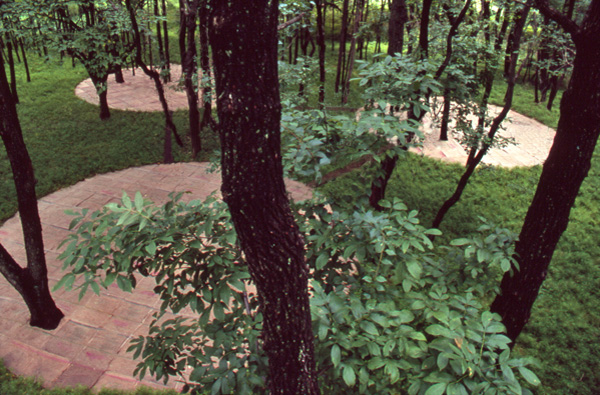
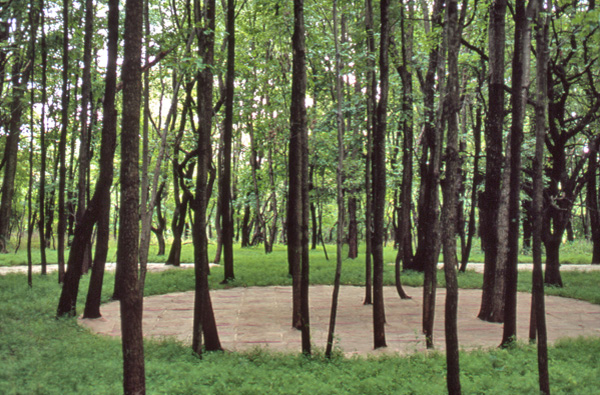

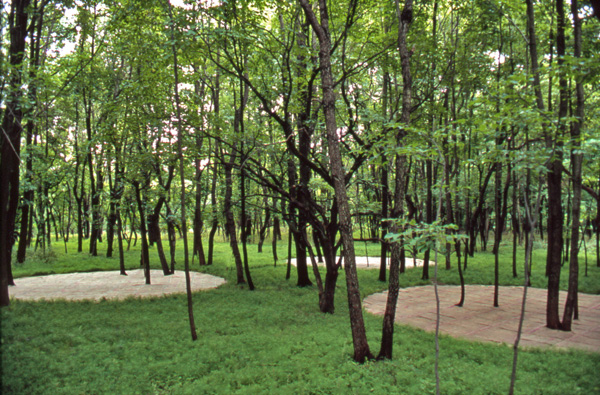
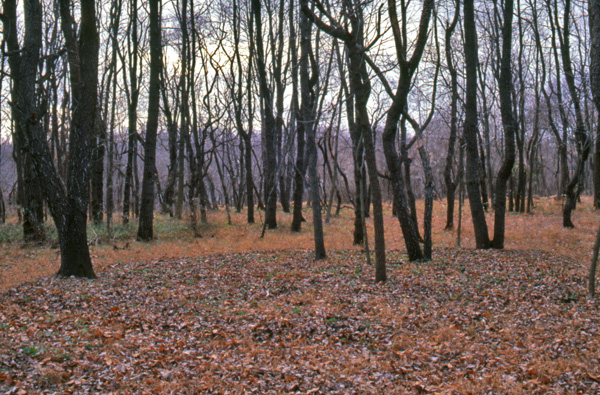
Landing: East West Cycle, 2004–2005
Edward Dormer
Public art, environmental work
The Schuylkill Center for Environmental Education, Philadelphia, Pennsylvania USA
Exhibition: Extinct Extant: Art in the Environment II, The Big Nothing
Presented by: Institute of Contemporary Art (University of Pennsylvania), The Schuylkill Center for Environmental Education, Philadelphia Sculptors
Curators: Mary Salvante (Schuylkill Center), Leslie Kaufman (Philadelphia Sculptors)
Participating artists: Brian Tolle, Jackie Brookner, Liat Margolis, Alex Robinson, Sylvia Benitez, Knox Cummin, Jan Tomilson Master
 LUCARNE