
Environmental / Deutschland
Three-part work situated across a post-mining forest in Brandenburg, Niederlausitz (Lower Lusatia), Deutschland—a landscape strip-mined for brown coal until its natural systems collapsed. The site’s deeper history is rooted in early Slavic occupation.
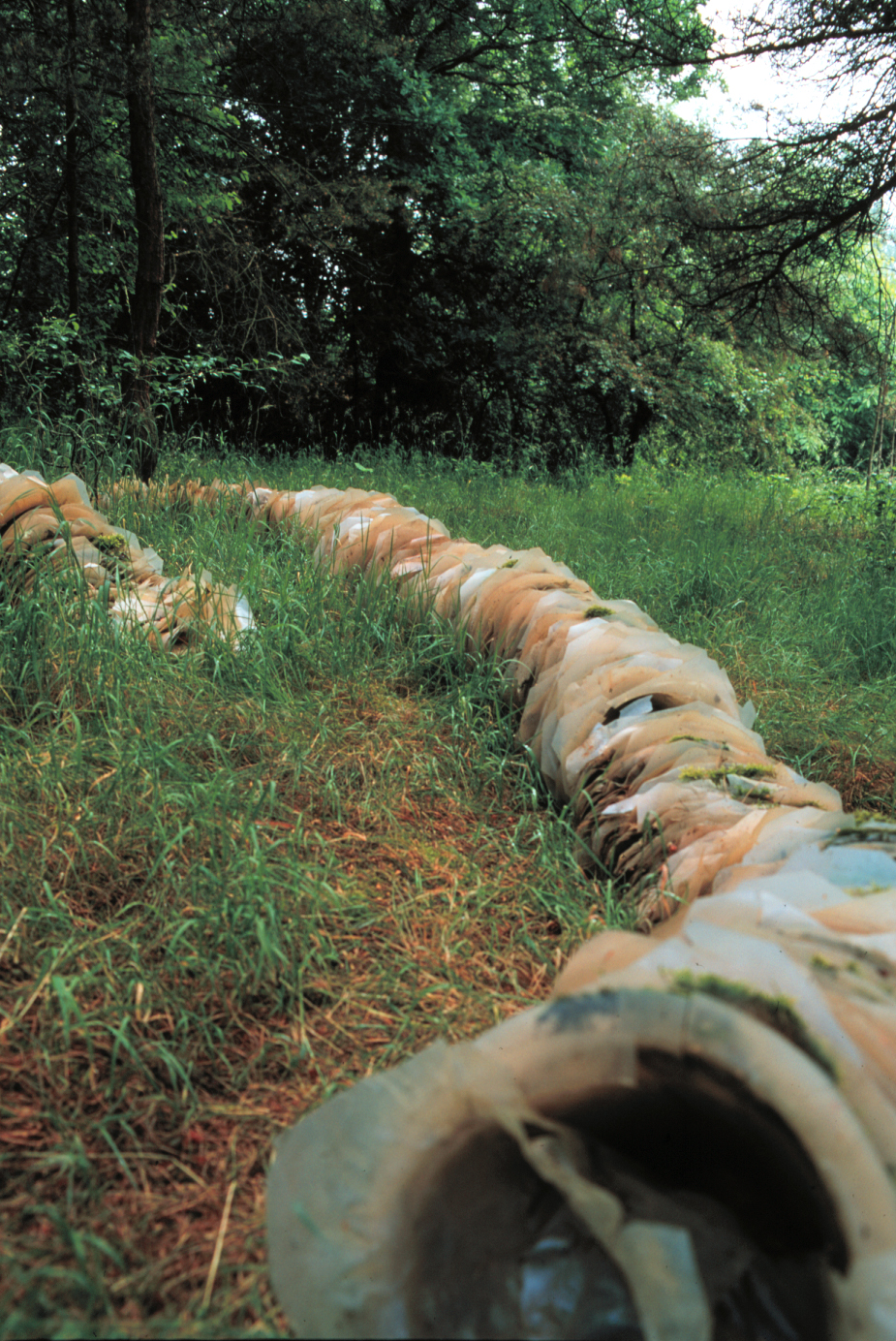
At ground level, a steel feeding manger is filled with orchard grass (Dactylis glomerata). Nine meters above, a second steel basket containing the same grass is suspended between trees. Plastic nursery containers from failed reforestation efforts remain scattered across the forest floor as permanent debris.
The feeding structures reference the aurochs (Bos primigenius), the extinct ancestor of domestic cattle that appears in Niederlausitz’s heraldry. The last aurochs died in 1627. The ten-hectare site is designated Gärten der Sinne (Garden of the Senses). Visitors move between feeding structures built for an absent animal and residual plastic waste, within a landscape shaped by extraction. The elevated grass remains permanently out of reach. ▧
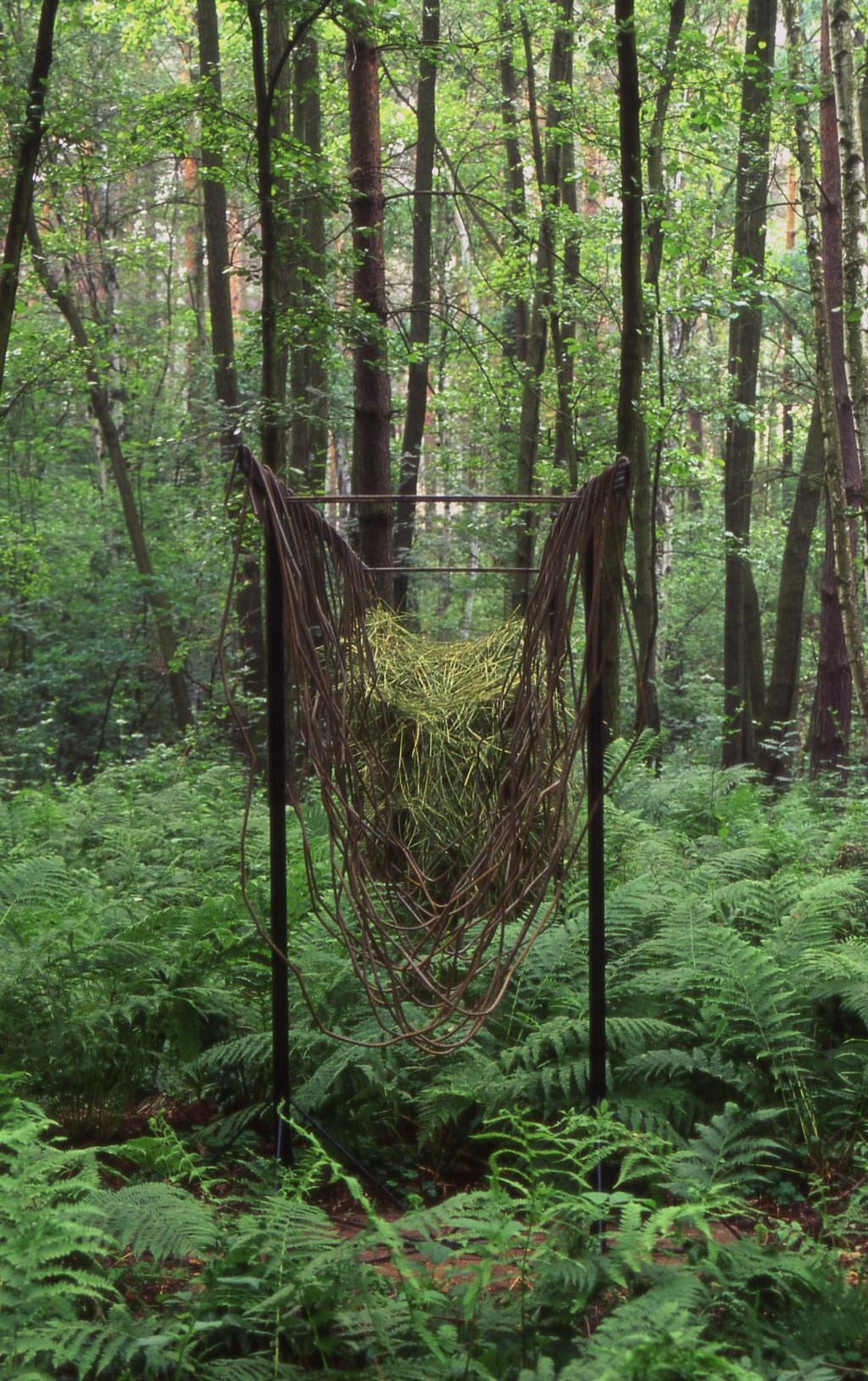
Steel, Orchard Grass (Dactylis glomerata)
2 x 4 x 1 meters
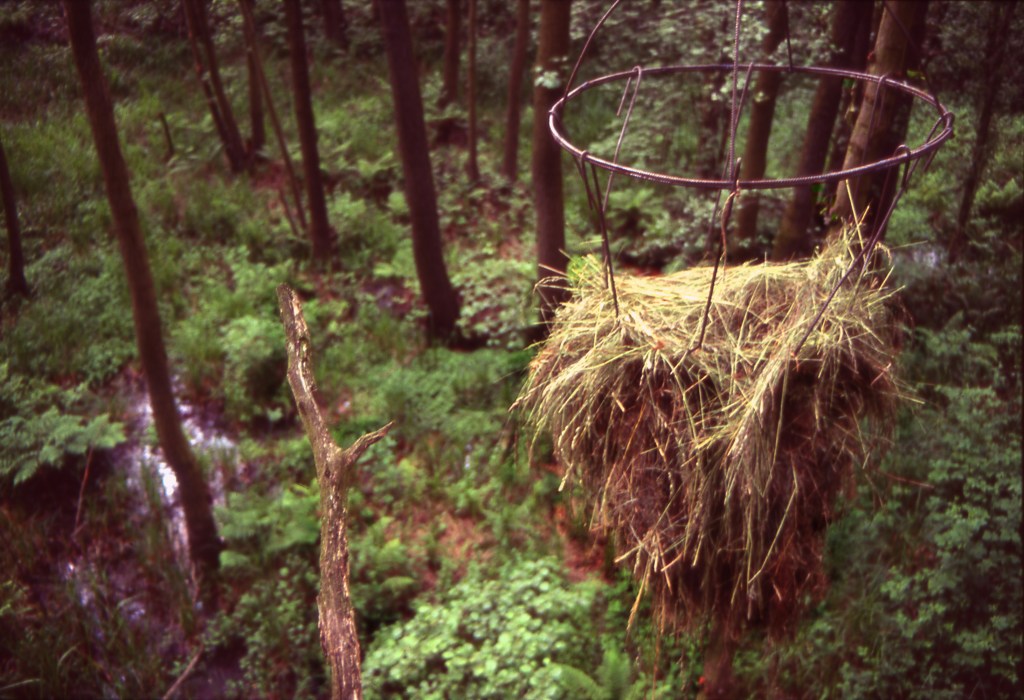
Steel, Orchard Grass (Dactylis glomerata)
1 meter wide, 9 meters above ground
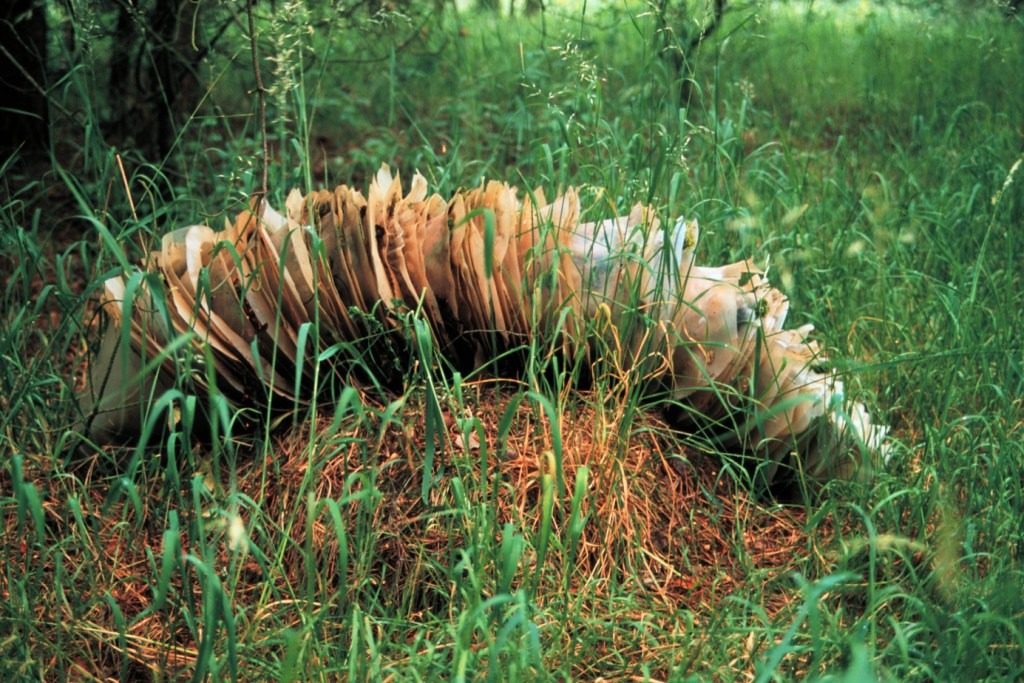
Plastic
Various, up to 5 meters in length
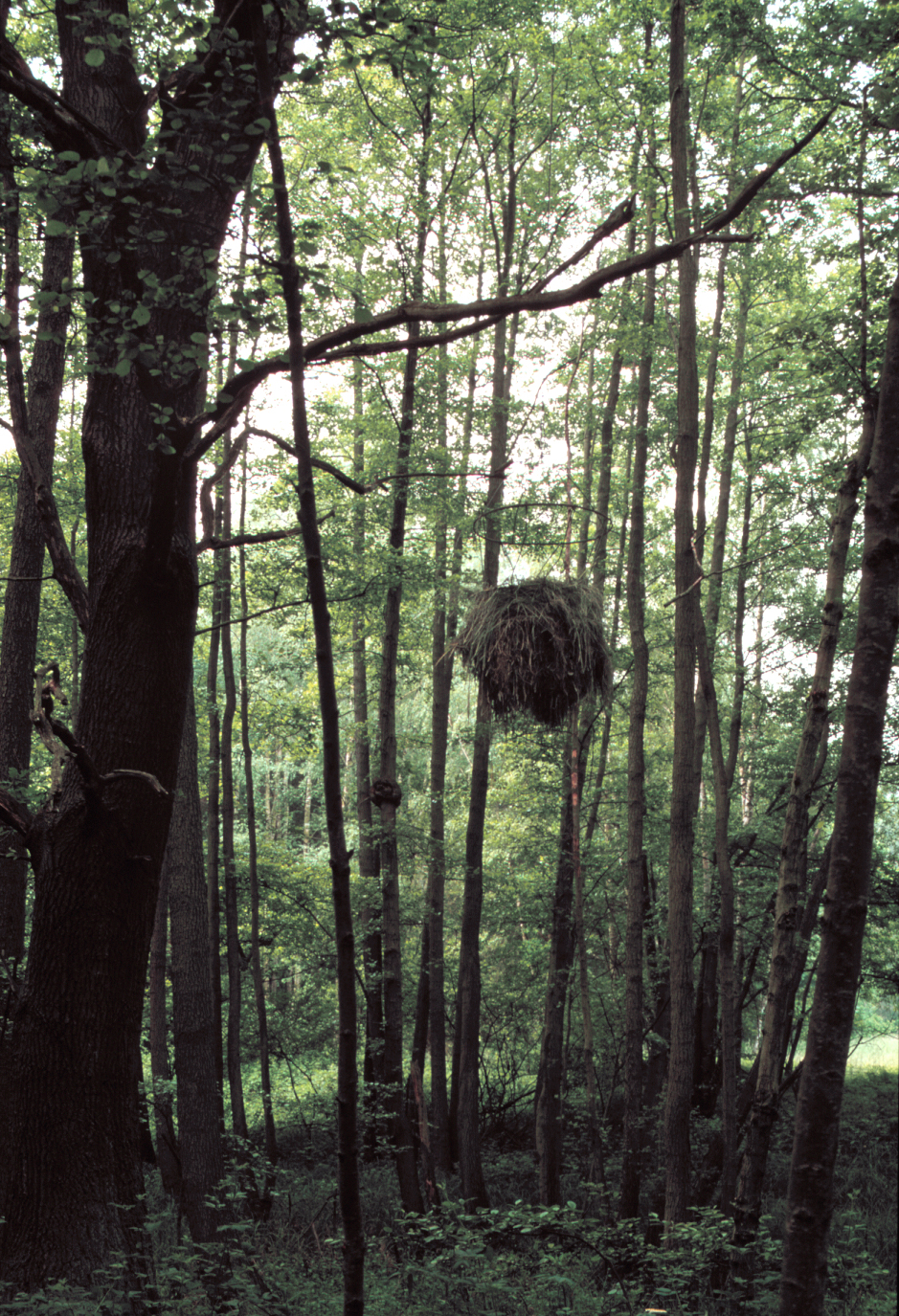
Steel, Orchard Grass (Dactylis glomerata)
1 meter wide, 9 meters above ground

Plastic
Various, up to 5 meters in length
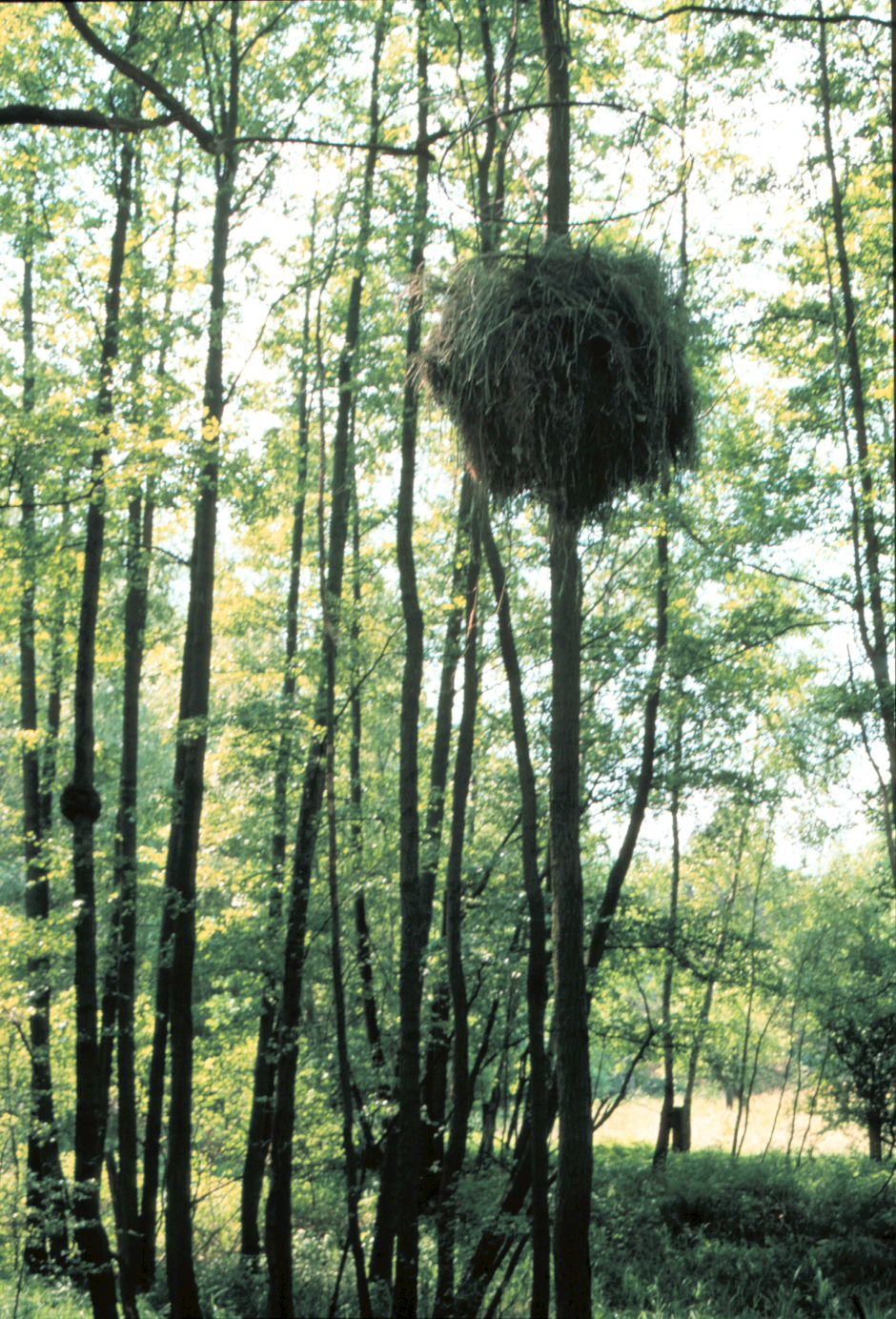
Steel, Orchard Grass (Dactylis glomerata)
1 meter wide, 9 meters above ground

Plastic
Various, up to 5 meters in length

Steel, Orchard Grass (Dactylis glomerata)
1 meter wide, 9 meters above ground
Gärten der Sinne, 1998
Edward Dormer
Public art, environmental work
Gehren (Heideblick), Brandenburg, Niederlausitz Deutschland
Symposium: Champs Magnétiques Künstlersymposium
Participating artists: Josina von der Boivin, Rainer Fest, Ulrich Krauss, Adolphe Lechtenberg, Inge Schmidt, Nadia Schmidt
Presented by: KunstNaturLandschaft Gärten der Sinne
Support: Ministry of Science, Research and Culture of the State of Brandenburg, District of Dahme-Spreewald
 LUCARNE